Skip to Main Content
  • UHealth |
  • Bascom Palmer Eye Institute

Reduce Chronic Inflammation - With Food

Sylvester Comprehensive Cancer Center
  • Appointments
  • Locations
  • Pay a Bill
  • Refer a Patient
  • International Patients
  • Donate Now
  • Search
  • Patient Login
  • Find a Doctor
  • Cancer Types & Treatments Page 1
    Cancer Types
    • Basal Cell Skin Cancer of the Eye
    • Benign Eye Diseases
    • Bladder Cancer
    • Bone and Soft Tissue Sarcoma
    • Brain and Spine Tumors
    • Breast Cancer
    • Colorectal Cancer
    • Cysts and Tumors of the Pleura
    • Endocrine Cancers
    • Eye and Ocular Cancer
    • Genitourinary Cancers
    • Glioblastoma
    • Gynecologic Cancers
    • Head and Neck Cancers
    • Hematologic (Blood) Cancers
    • Hodgkin Lymphoma
    • Leukemia
    • Liver Cancer
    • Lung and Chest Cancer
    • Melanoma and Merkel Cell Carcinomas
    • Multiple Myeloma
    • Non-Hodgkin Lymphoma
    • Ocular Lymphoma
    • Pancreatic Cancer
    • Pediatric Cancers
    • Prostate Cancer
    • Skin Cancers
    • Bone and Soft Tissue Sarcoma
    • Stomach Cancer
    • Thyroid Cancer
    View all Cancer Types
    Treatments
    • Bone Marrow and Stem Cell Transplant
    • Breast Reconstruction
    • CAR T-cell Therapy
    • Gamma Knife Radiosurgery
    • Hyperthermic Intraperitoneal and Intrapleural Chemotherapy (HIPEC)
    • Laser Ablation
    • Laser Interstitial Thermal Therapy
    • Minimally Invasive Brain Tumor Surgery
    • Precision Medicine
    • Proton Therapy
    • Radiation Therapy
    • Radioactive Iodine Therapy
    Cancer Types
    • Basal Cell Skin Cancer of the Eye
    • Benign Eye Diseases
    • Bladder Cancer
    • Bone and Soft Tissue Sarcoma
    • Brain and Spine Tumors
    • Breast Cancer
    • Colorectal Cancer
    • Cysts and Tumors of the Pleura
    • Endocrine Cancers
    • Eye and Ocular Cancer
    • Genitourinary Cancers
    • Glioblastoma
    • Gynecologic Cancers
    • Head and Neck Cancers
    • Hematologic (Blood) Cancers
    • Hodgkin Lymphoma
    • Leukemia
    • Liver Cancer
    • Lung and Chest Cancer
    • Melanoma and Merkel Cell Carcinomas
    • Multiple Myeloma
    • Non-Hodgkin Lymphoma
    • Ocular Lymphoma
    • Pancreatic Cancer
    • Pediatric Cancers
    • Prostate Cancer
    • Skin Cancers
    • Bone and Soft Tissue Sarcoma
    • Stomach Cancer
    • Thyroid Cancer
    View all Cancer Types
  • Patients & Families
    For Patients & Families
    • Your First Visit
    • Parking Information
    • Frequently Asked Questions
    • Classes & Events
    • Nurse Navigators
    • Interpreter Services
    • Clinical Trials
    • International Patients
    • Medical Records
    • Quality and Patient Safety
    • Patient Educational Materials
    • Advance Directives
    • Bereavement Support

    Cancer Prevention & Screening
    • Why Get Screened?
    • Hereditary Cancer Risk
    • Breast Cancer Screening
    • Cervical Cancer Screening
    • Colorectal Cancer Screening
    • Lung Cancer Screening
    • Prostate Cancer Screening
    • Skin Cancer Screening
    • Stomach Cancer Screening
    • Lifestyle Medicine
    Cancer Supportive Care
    • Classes & Events
    • Acupuncture
    • Adolescent and Young Adult (Ages 15-39) Program
    • Art Therapy
    • Emotional and Mental Well-Being
    • Exercise Oncology
    • Massage Therapy
    • Music Therapy
    • Nutrition
    • Oncology Social Work Services
    • Spiritual Care
    • Support Groups & Programs
    • Wigs and Head Coverings
    • Yoga Therapy
    • View All Cancer Supportive Care
    Cancer Survivorship Care
    • Cancer Survivorship & Supportive Care Institute
    • Survivorship Care
    • Survivorship FAQs
    • Your Survivorship Information
    • Cancer Supportive Care
    • Survivorship News
    • Education & Events
    • Institute Leadership
    • Survivorship Team
    • Survivorship And Supportive Care Research

    Quick Links

    • Appointments
    • Find a Doctor
    • Pay a Bill
    • Insurance Plans Accepted
    • MyUHealthChart
    Donate Today
    Quick links
    • Appointments
    • Find a Doctor
    • Pay a Bill
    • Make a Gift
    • Insurance Plans Accepted
    • MyUHealthChart
    For Patients & Families
    • Your First Visit
    • Parking Information
    • Frequently Asked Questions
    • Classes & Events
    • Nurse Navigators
    • Interpreter Services
    • Clinical Trials
    • International Patients
    • Medical Records
    • Quality and Patient Safety
    • Patient Educational Materials
    • Advance Directives

    Cancer Prevention & Screening
    • Why Get Screened?
    • Hereditary Cancer Risk
    • Breast Cancer Screening
    • Cervical Cancer Screening
    • Colorectal Cancer Screening
    • Lung Cancer Screening
    • Prostate Cancer Screening
    • Skin Cancer Screening
    • Stomach Cancer Screening
    • Lifestyle Medicine
    Cancer Supportive Care
    • Classes & Events
    • Acupuncture
    • Adolescent and Young Adult (Ages 15-39) Program
    • Art Therapy
    • Emotional and Mental Well-Being
    • Exercise Oncology
    • Massage Therapy
    • Music Therapy
    • Nutrition
    • Oncology Social Work Services
    • Spiritual Care
    • Support Groups & Programs
    • Wigs and Head Coverings
    • Yoga Therapy
    • View All Cancer Supportive Care
    Cancer Survivorship Care
    • Cancer Survivorship & Supportive Care Institute
    • Survivorship Care
    • Survivorship FAQs
    • Your Survivorship Information
    • Cancer Supportive Care
    • Survivorship News
    • Education & Events
    • Institute Leadership
    • Survivorship Team
    • Survivorship And Supportive Care Research
    About Sylvester
    • Why Choose Sylvester
    • Message from the Director
    • NCI-Designated Cancer Center
    • Cancer Center of Excellence
    • Our History
    • Mission, Vision & Values
    • Facts and Figures
    • Impact Reports
    • Leadership
    • Partners in Our Mission
    • Careers
    • Cancer Center Volunteers
    • Make a Gift
    • Health News
    • Contact Us
  • Research
    Clinical Trials
    • Find a Clinical Trial
    • Understanding Clinical Trials
    • Clinical Trials FAQ's
    • Phase 1 Clinical Trials
    About Our Research
    • Research Programs
    • Engineering Cancer Cures
    • Faculty
    • Labs
    Research Resources
    • Clinical Research Services
    • Shared Resources
    • Data Science
    • SCAN 360
    • Funding Opportunities
    • Tumor Registry
     
    • Medical Library
    • Grant Writing Support
    • Human Subject Research Office
    • Regulatory Oversight
    • IACUC
    • Responsible Conduct of Research (RCR)
    Clinical Trials
    • Find a Clinical Trial
    • Understanding Clinical Trials
    • Clinical Trials FAQ's
    • Phase 1 Clinical Trials
    About Our Research
    • Research Programs
    • Engineering Cancer Cures
    • Faculty
    • Labs
    Research Resources
    • Clinical Research Services
    • Shared Resources
    • Data Science
    • SCAN 360
    • Funding Opportunities
    • Tumor Registry
    • Medical Library
    • Grant Writing Support
    • Human Subject Research Office
    • Regulatory Oversight
    • IACUC
    • Responsible Conduct of Research (RCR)
  • Education and Training
    Education and Training
    • About Us
    • High School, Undergraduate, & Postbaccalaureate Students
    • Medical Students
    • Graduate Program
    • Postdoctoral Training
    • Clinical Fellowships
     
    • Faculty Development
    • Events Calendar
    Education and Training
    • About Us
    • High School, Undergraduate, & Postbaccalaureate Students
    • Medical Students
    • Graduate Program
    • Postdoctoral Training
    • Clinical Fellowships
    • Faculty Development
    • Events Calendar
  • Community Engagement
    Community Outreach Activity
    • What We Do
    • Game Changer Vehicles
    • Request Our Services
    • Who We Are
    • The Area We Serve
    • Community Partnerships
    • Unite Us
    • Community Advisory Committee (CAC)
    • Partnership Matching Request Form
    • Spotlight Corner
    Community Engagement
    • Firefighter Cancer Initiative
    • Global Oncology
    • World Health Organization
    • Avanzando Caminos: Hispanic/Latino Cancer Survivorship Cohort Study
    Community Outreach Activity
    • What We Do
    • Game Changer Vehicles
    • Request Our Services
    • Who We Are
    • The Area We Serve
    • Community Partnerships
    • Unite Us
    • Community Advisory Committee (CAC)
    • Partnership Matching Request Form
    • Spotlight Corner
    Community Engagement
    • Firefighter Cancer Initiative
    • Global Oncology
    • World Health Organization
    • Avanzando Caminos: Hispanic/Latino Cancer Survivorship Cohort Study
  • About Sylvester
    About Sylvester
    • Why Choose Sylvester
    • Message from the Director
    • NCI-Designated Cancer Center
    • Cancer Center of Excellence
    • Our History
    • Mission, Vision & Values
    • Facts and Figures
    • Impact Reports
     
    • Leadership
    • Partners in Our Mission
    • Careers
    • Cancer Center Volunteers
    • Make a Gift
    • Health News
    • Contact Us
    About Sylvester
    • Why Choose Sylvester
    • Message from the Director
    • NCI-Designated Cancer Center
    • Cancer Center of Excellence
    • Our History
    • Mission, Vision & Values
    • Facts and Figures
    • Impact Reports
    • Leadership
    • Partners in Our Mission
    • Careers
    • Cancer Center Volunteers
    • Make a Gift
    • Health News
    • Contact Us
Patient Login
  • University of Miami Health System
  • Sylvester Comprehensive Cancer Center
  • Cancer Survivorship and Supportive Care
  • Survivor Newsletters and Workshops
  • Fall 2021 Newsletter
  • Stories
  • Reduce Chronic Inflammation - With Food
  • University of Miami Health System
  • Sylvester Comprehensive Cancer Center
  • Cancer Survivorship and Supportive Care
  • Survivor Newsletters and Workshops
  • Fall 2021 Newsletter
  • Stories
  • Reduce Chronic Inflammation - With Food

Reduce Chronic Inflammation - With Food

« Back to Fall 2021 Newsletter
Survivor Newsletters and Workshops
  • Summer 2025 Newsletter
  • Winter 2025 Newsletter
  • Fall 2024 Newsletter
  • Summer 2024 Newsletter
    • Palliative Care is Not Hospice
    • 5 Things I Learned About Cancer From My Diagnosis
    • Young Sarcoma Survivor Embraces Life After Battling Cancer
  • Spring 2024 Newsletter
    • Knowing Your Cancer Risk Can Be Empowering
    • When Cancer Survivors Look Good, They Feel Better
    • Music is Medicine
  • Winter 2024 Newsletter
    • Cancer’s Impact on the Hispanic Community
    • A Conversation with Dr. Felicia Marie Knaul
    • Exercise After Cancer Treatment Improves Health and Lowers Risk of Recurrence
    • Sweet Potato Ginger Pudding
    • There is Always Hope
  • Summer 2023 Newsletter
    • Financial Toxicity
    • Nutrition and Cancer Survivorship
    • Can More Meatless Meals Lower Your Cancer Risk?
    • Should People with Cancer Exercise?
  • Spring 2023 Newsletter
    • The Power of Reframing
    • The Weight of a Word: Survivor
    • Sylvester Goes to Capitol Hill in Support of Comprehensive Cancer Survivorship Act
    • Sylvester Celebrates Inaugural Cancer Survivorship Symposium
    • Art Therapy: More Than Just a Coping Skill
    • From Cancer Survivor to Nurse: A Tale of Empathy
  • Fall 2022 Newsletter
    • Two Women, Two Points on the Cancer Survivorship Journey
    • Support at Any Stage
    • Stories
      • If My Parent Had Cancer, Am I at a Higher Risk?
      • New Online Tool Supports Cancer Patient Wellness
  • Summer 2022 Newsletter
    • A Matter of Survival
    • Oncofertility 101
    • Stories
      • New Lifestyle Guidelines for Cancer Survivors
      • Patient Beware: Study Finds Potential for Massive Cancer Nutrition Misinformation on Pinterest
      • What Is It Like to Live with Advanced Cancer?
  • Winter 2022 Newsletter
    • The Mind-Body Connection
    • Survivorship Clinic
    • A Match Made in Heaven
    • Stories
      • Sex: The Breast Cancer Topic No One Talks About
      • Take Care of Yourself During Radiation Therapy
  • Fall 2021 Newsletter
    • Welcome Letter
    • Coming to Terms with Change and Knowing My Limits
    • Stories
      • 11th Dolphins Challenge Cancer Event Raises Millions for Research at Sylvester
      • Finding Strength Through Music
      • Reduce Chronic Inflammation - With Food
    • Cancer Support Services Events
  • Cancer Support Services Events

What is inflammation, and why is it so bad for your health?

Inflammation is the body’s natural response to fighting infection, injury, and toxins. But, widespread chronic inflammation can damage healthy cells, tissues, and organs. This can cause fatigue, fever, mouth sores, rashes, abdominal pain, and chest pain. Over time, the body’s inflammatory response can contribute to life-threatening conditions, including cancer, heart disease, rheumatoid arthritis, type 2 diabetes, asthma, and Alzheimer’s disease.

What causes chronic inflammation?

One of the leading causes of chronic, widespread inflammation is excess body fat, especially visceral fat, which is stored in the belly and around major organs.

“It’s estimated that 100,000 cancer cases in the U.S. each year are linked to excess body fat,” says Lesley Klein M.S., RD, LD/N, a dietitian with Sylvester Comprehensive Cancer Center. “Research shows a strong link between excess body fat and the risk of 12 cancers.”

How does body fat contribute to inflammatory diseases? Hormones. Excess fat tissue produces hormones and high levels of a protein called cytokines. This combination triggers inflammation.

What’s the connection between food and inflammation?

While many factors can lead to weight gain and excess body fat, what you eat — and don’t eat — can have a huge impact on your waistline and your body’s inflammatory response.

Here’s a simple truth. The two main food items that increase inflammation (and contribute to weight gain) are sugar and animal products.

Of course, sweet treats like cakes and cookies contain sugar. But, added sugar is also hiding in refined foods ranging from cereal, bread, and crackers to fast foods and sauces/dressings to yogurt and non-dairy milk. Animal products that contribute to inflammation include red meat, fried chicken and pork, processed meats (frozen meals, hot dogs, sausages, canned meats, deli meats), and full-fat dairy products.

Other items linked to increased inflammation include trans fats (found in margarine, shortening, and lard) and sugar-sweetened beverages (like coffee-shop indulgences, energy drinks, fruity drinks, and some coconut water).

How to ‘Eat the Rainbow’

“I tell my patients that they should ‘eat a rainbow’ of antioxidants and phytochemicals,” Klein says. “Eating a variety of colors can help maximize the nutritional value of your diet. Each color of food is beneficial for reducing the risk and advancement of different health conditions.”

RED
Tomatoes are high in the antioxidant lycopene.

Berries and cherries provide antioxidants known as anthocyanins and catechins.

ORANGE
Carrots and orange-colored citrus fruits are rich in vitamin A and beta-carotene, which may help fight inflammation.

Sweet potato is an excellent alternative to white starches like potatoes, rice, and pasta because they contain more fiber and nutrients (and less naturally occurring sugars).

Turmeric is known for containing the anti-inflammatory nutrient curcumin. Eating black pepper with turmeric can enhance the absorption of curcumin.

YELLOW
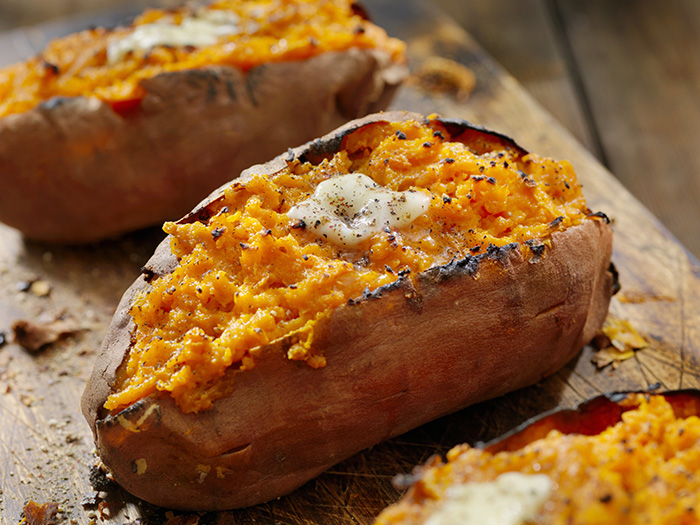
Sweet PotatoButternut squash, like sweet potato, is a fiber-rich starch.

Bell peppers of all colors are rich in quercetin, sinapic acid, ferulic acid, and other antioxidants.

GREEN
Broccoli contains sulforaphane, an antioxidant that reduces cytokines and NF-kB levels, which stimulates inflammation.

Dark leafy greens (spinach, kale, arugula, chard) are high in antioxidants and polyphenols and should be a staple of every diet.

Avocados contain carotenoids and tocopherols, which are linked to reduced cancer risk.

Green tea has antioxidant and anti-inflammatory properties from epigallocatechin-3-gallate (EGCG), which reduces cytokine production and damage to the fatty acids in your cells.

Olive oil contains oleocanthal, an antioxidant that’s found in higher doses in extra virgin olive oil than in more refined oils.

BLUE
Blueberries are an excellent source of anthocyanins.

PURPLE
Grapes contain anthocyanins, which also reduce inflammation.

BROWN
Mushrooms contain phenols and other antioxidants. Try eating them raw or lightly cooked to get the full benefit.

Whole grains like brown rice, whole-wheat bread, farro, and oatmeal are often high in fiber and help reduce inflammation.

Nuts like walnuts and almonds contain healthy fats that don’t cause inflammatory weight gain when eaten in moderation.

Maple syrup is better than white sugar if you want a little sweetener without triggering inflammation.

BLACK
Coffee (unsweetened) contains polyphenols and other anti-inflammatory compounds.

Dark chocolate and unsweetened cocoa provide heart-healthy flavonols. Choose dark chocolate with at least 70% cocoa to get the anti-inflammatory benefits not found in milk and white chocolate.

Omega-3 fatty acids (EPA and DHA) also reduce inflammation. Cold-water fish like salmon, tuna, cod, mackerel, herring, sardines, and anchovies, are great sources of this nutrient.

How much food should you eat?

There is no standard amount of antioxidants you should consume. It depends on your weight, genetics, daily physical activity, and daily caloric intake.

To support your overall health and avoid disease, the American Institute for Cancer Research recommends The New American Plate:

  • 2/3 of your plate is packed with plant-based foods
  • 1/3 can be animal products

“It’s really about eating a variety of color every day,” Klein says. “Nutrients are better absorbed through food, so I would recommend supplements only if someone is depleted of a particular nutrient.”

Dana Kantrowitz is a contributing writer for UMiami Health News.


logo--sylvester

NCI Designated

USNWR Cancer 2025-2026 Badge

Cancer Center of Excellence
Quick links
  • Appointments
  • Find a Doctor
  • Pay a Bill
  • Make a Gift
  • Insurance Plans Accepted
  • MyUHealthChart

Patient & Families
  • Cancer Treatments
  • Cancer Supportive Care
  • Your First Visit
  • Frequently Asked Questions
  • Nurse Navigators
  • Interpreter Services
  • Clinical Trials
  • International Patients
  • Medical Records
  • Price Transparency
  • Florida Health Finder
Research
  • Research at Sylvester
  • Research Programs
  • Research Labs & Faculty
  • Clinical Research Services
  • Shared Resources
  • Clinical Fellowship
  • Community Outreach Activity
About Sylvester
  • Why Choose Sylvester
  • NCI-Designated Cancer Center
  • Cancer Center of Excellence
  • Our History
  • Impact Reports
  • Mission, Vision & Values
  • Quality and Patient Safety
  • Leadership
  • Careers
  • Volunteers
  • For Media
  • Contact Us
  • Make a Gift

University of Miami Centennial Logo

Medical Disclaimer | Terms of Use | Privacy Statement | HIPAA Notice of Privacy Practices | For Employees
© 2025 University of Miami Health System. All rights reserved.