Skip to Main Content
  • UHealth |
  • Bascom Palmer Eye Institute

Music is Medicine

Sylvester Comprehensive Cancer Center
  • Appointments
  • Locations
  • Pay a Bill
  • Refer a Patient
  • International Patients
  • Donate Now
  • Search
  • Patient Login
  • Find a Doctor
  • Cancer Types & Treatments Page 1
    Cancer Types
    • Basal Cell Skin Cancer of the Eye
    • Benign Eye Diseases
    • Bladder Cancer
    • Bone and Soft Tissue Sarcoma
    • Brain and Spine Tumors
    • Breast Cancer
    • Colorectal Cancer
    • Cysts and Tumors of the Pleura
    • Endocrine Cancers
    • Eye and Ocular Cancer
    • Genitourinary Cancers
    • Glioblastoma
    • Gynecologic Cancers
    • Head and Neck Cancers
    • Hematologic (Blood) Cancers
    • Hodgkin Lymphoma
    • Leukemia
    • Liver Cancer
    • Lung and Chest Cancer
    • Melanoma and Merkel Cell Carcinomas
    • Multiple Myeloma
    • Non-Hodgkin Lymphoma
    • Ocular Lymphoma
    • Pancreatic Cancer
    • Pediatric Cancers
    • Prostate Cancer
    • Skin Cancers
    • Bone and Soft Tissue Sarcoma
    • Stomach Cancer
    • Thyroid Cancer
    View all Cancer Types
    Treatments
    • Bone Marrow and Stem Cell Transplant
    • Breast Reconstruction
    • CAR T-cell Therapy
    • Gamma Knife Radiosurgery
    • Hyperthermic Intraperitoneal and Intrapleural Chemotherapy (HIPEC)
    • Laser Ablation
    • Laser Interstitial Thermal Therapy
    • Minimally Invasive Brain Tumor Surgery
    • Precision Medicine
    • Proton Therapy
    • Radiation Therapy
    • Radioactive Iodine Therapy
    Cancer Types
    • Basal Cell Skin Cancer of the Eye
    • Benign Eye Diseases
    • Bladder Cancer
    • Bone and Soft Tissue Sarcoma
    • Brain and Spine Tumors
    • Breast Cancer
    • Colorectal Cancer
    • Cysts and Tumors of the Pleura
    • Endocrine Cancers
    • Eye and Ocular Cancer
    • Genitourinary Cancers
    • Glioblastoma
    • Gynecologic Cancers
    • Head and Neck Cancers
    • Hematologic (Blood) Cancers
    • Hodgkin Lymphoma
    • Leukemia
    • Liver Cancer
    • Lung and Chest Cancer
    • Melanoma and Merkel Cell Carcinomas
    • Multiple Myeloma
    • Non-Hodgkin Lymphoma
    • Ocular Lymphoma
    • Pancreatic Cancer
    • Pediatric Cancers
    • Prostate Cancer
    • Skin Cancers
    • Bone and Soft Tissue Sarcoma
    • Stomach Cancer
    • Thyroid Cancer
    View all Cancer Types
  • Patients & Families
    For Patients & Families
    • Your First Visit
    • Parking Information
    • Frequently Asked Questions
    • Classes & Events
    • Nurse Navigators
    • Interpreter Services
    • Clinical Trials
    • International Patients
    • Medical Records
    • Quality and Patient Safety
    • Patient Educational Materials
    • Advance Directives
    • Bereavement Support

    Cancer Prevention & Screening
    • Why Get Screened?
    • Hereditary Cancer Risk
    • Breast Cancer Screening
    • Cervical Cancer Screening
    • Colorectal Cancer Screening
    • Lung Cancer Screening
    • Prostate Cancer Screening
    • Skin Cancer Screening
    • Stomach Cancer Screening
    • Lifestyle Medicine
    Cancer Supportive Care
    • Classes & Events
    • Acupuncture
    • Adolescent and Young Adult (Ages 15-39) Program
    • Art Therapy
    • Emotional and Mental Well-Being
    • Exercise Oncology
    • Massage Therapy
    • Music Therapy
    • Nutrition
    • Oncology Social Work Services
    • Spiritual Care
    • Support Groups & Programs
    • Wigs and Head Coverings
    • Yoga Therapy
    • View All Cancer Supportive Care
    Cancer Survivorship Care
    • Cancer Survivorship & Supportive Care Institute
    • Survivorship Care
    • Survivorship FAQs
    • Your Survivorship Information
    • Cancer Supportive Care
    • Survivorship News
    • Education & Events
    • Institute Leadership
    • Survivorship Team
    • Survivorship And Supportive Care Research

    Quick Links

    • Appointments
    • Find a Doctor
    • Pay a Bill
    • Insurance Plans Accepted
    • MyUHealthChart
    Donate Today
    Quick links
    • Appointments
    • Find a Doctor
    • Pay a Bill
    • Make a Gift
    • Insurance Plans Accepted
    • MyUHealthChart
    For Patients & Families
    • Your First Visit
    • Parking Information
    • Frequently Asked Questions
    • Classes & Events
    • Nurse Navigators
    • Interpreter Services
    • Clinical Trials
    • International Patients
    • Medical Records
    • Quality and Patient Safety
    • Patient Educational Materials
    • Advance Directives

    Cancer Prevention & Screening
    • Why Get Screened?
    • Hereditary Cancer Risk
    • Breast Cancer Screening
    • Cervical Cancer Screening
    • Colorectal Cancer Screening
    • Lung Cancer Screening
    • Prostate Cancer Screening
    • Skin Cancer Screening
    • Stomach Cancer Screening
    • Lifestyle Medicine
    Cancer Supportive Care
    • Classes & Events
    • Acupuncture
    • Adolescent and Young Adult (Ages 15-39) Program
    • Art Therapy
    • Emotional and Mental Well-Being
    • Exercise Oncology
    • Massage Therapy
    • Music Therapy
    • Nutrition
    • Oncology Social Work Services
    • Spiritual Care
    • Support Groups & Programs
    • Wigs and Head Coverings
    • Yoga Therapy
    • View All Cancer Supportive Care
    Cancer Survivorship Care
    • Cancer Survivorship & Supportive Care Institute
    • Survivorship Care
    • Survivorship FAQs
    • Your Survivorship Information
    • Cancer Supportive Care
    • Survivorship News
    • Education & Events
    • Institute Leadership
    • Survivorship Team
    • Survivorship And Supportive Care Research
    About Sylvester
    • Why Choose Sylvester
    • Message from the Director
    • NCI-Designated Cancer Center
    • Cancer Center of Excellence
    • Our History
    • Mission, Vision & Values
    • Facts and Figures
    • Impact Reports
    • Leadership
    • Partners in Our Mission
    • Careers
    • Cancer Center Volunteers
    • Make a Gift
    • Health News
    • Contact Us
  • Research
    Clinical Trials
    • Find a Clinical Trial
    • Understanding Clinical Trials
    • Clinical Trials FAQ's
    • Phase 1 Clinical Trials
    About Our Research
    • Research Programs
    • Engineering Cancer Cures
    • Faculty
    • Labs
    Research Resources
    • Clinical Research Services
    • Shared Resources
    • Data Science
    • SCAN 360
    • Funding Opportunities
    • Tumor Registry
     
    • Medical Library
    • Grant Writing Support
    • Human Subject Research Office
    • Regulatory Oversight
    • IACUC
    • Responsible Conduct of Research (RCR)
    Clinical Trials
    • Find a Clinical Trial
    • Understanding Clinical Trials
    • Clinical Trials FAQ's
    • Phase 1 Clinical Trials
    About Our Research
    • Research Programs
    • Engineering Cancer Cures
    • Faculty
    • Labs
    Research Resources
    • Clinical Research Services
    • Shared Resources
    • Data Science
    • SCAN 360
    • Funding Opportunities
    • Tumor Registry
    • Medical Library
    • Grant Writing Support
    • Human Subject Research Office
    • Regulatory Oversight
    • IACUC
    • Responsible Conduct of Research (RCR)
  • Education and Training
    Education and Training
    • About Us
    • High School, Undergraduate, & Postbaccalaureate Students
    • Medical Students
    • Graduate Program
    • Postdoctoral Training
    • Clinical Fellowships
     
    • Faculty Development
    • Events Calendar
    Education and Training
    • About Us
    • High School, Undergraduate, & Postbaccalaureate Students
    • Medical Students
    • Graduate Program
    • Postdoctoral Training
    • Clinical Fellowships
    • Faculty Development
    • Events Calendar
  • Community Engagement
    Community Outreach Activity
    • What We Do
    • Game Changer Vehicles
    • Request Our Services
    • Who We Are
    • The Area We Serve
    • Community Partnerships
    • Unite Us
    • Community Advisory Committee (CAC)
    • Partnership Matching Request Form
    • Spotlight Corner
    Community Engagement
    • Firefighter Cancer Initiative
    • Global Oncology
    • World Health Organization
    • Avanzando Caminos: Hispanic/Latino Cancer Survivorship Cohort Study
    Community Outreach Activity
    • What We Do
    • Game Changer Vehicles
    • Request Our Services
    • Who We Are
    • The Area We Serve
    • Community Partnerships
    • Unite Us
    • Community Advisory Committee (CAC)
    • Partnership Matching Request Form
    • Spotlight Corner
    Community Engagement
    • Firefighter Cancer Initiative
    • Global Oncology
    • World Health Organization
    • Avanzando Caminos: Hispanic/Latino Cancer Survivorship Cohort Study
  • About Sylvester
    About Sylvester
    • Why Choose Sylvester
    • Message from the Director
    • NCI-Designated Cancer Center
    • Cancer Center of Excellence
    • Our History
    • Mission, Vision & Values
    • Facts and Figures
    • Impact Reports
     
    • Leadership
    • Partners in Our Mission
    • Careers
    • Cancer Center Volunteers
    • Make a Gift
    • Health News
    • Contact Us
    About Sylvester
    • Why Choose Sylvester
    • Message from the Director
    • NCI-Designated Cancer Center
    • Cancer Center of Excellence
    • Our History
    • Mission, Vision & Values
    • Facts and Figures
    • Impact Reports
    • Leadership
    • Partners in Our Mission
    • Careers
    • Cancer Center Volunteers
    • Make a Gift
    • Health News
    • Contact Us
Patient Login
  • University of Miami Health System
  • Sylvester Comprehensive Cancer Center
  • Cancer Survivorship and Supportive Care
  • Survivor Newsletters and Workshops
  • Spring 2024 Newsletter
  • Music is Medicine
  • University of Miami Health System
  • Sylvester Comprehensive Cancer Center
  • Cancer Survivorship and Supportive Care
  • Survivor Newsletters and Workshops
  • Spring 2024 Newsletter
  • Music is Medicine

Music is Medicine

« Back to Spring 2024 Newsletter
Survivor Newsletters and Workshops
  • Summer 2025 Newsletter
  • Winter 2025 Newsletter
  • Fall 2024 Newsletter
  • Summer 2024 Newsletter
    • Palliative Care is Not Hospice
    • 5 Things I Learned About Cancer From My Diagnosis
    • Young Sarcoma Survivor Embraces Life After Battling Cancer
  • Spring 2024 Newsletter
    • Knowing Your Cancer Risk Can Be Empowering
    • When Cancer Survivors Look Good, They Feel Better
    • Music is Medicine
  • Winter 2024 Newsletter
    • Cancer’s Impact on the Hispanic Community
    • A Conversation with Dr. Felicia Marie Knaul
    • Exercise After Cancer Treatment Improves Health and Lowers Risk of Recurrence
    • Sweet Potato Ginger Pudding
    • There is Always Hope
  • Summer 2023 Newsletter
    • Financial Toxicity
    • Nutrition and Cancer Survivorship
    • Can More Meatless Meals Lower Your Cancer Risk?
    • Should People with Cancer Exercise?
  • Spring 2023 Newsletter
    • The Power of Reframing
    • The Weight of a Word: Survivor
    • Sylvester Goes to Capitol Hill in Support of Comprehensive Cancer Survivorship Act
    • Sylvester Celebrates Inaugural Cancer Survivorship Symposium
    • Art Therapy: More Than Just a Coping Skill
    • From Cancer Survivor to Nurse: A Tale of Empathy
  • Fall 2022 Newsletter
    • Two Women, Two Points on the Cancer Survivorship Journey
    • Support at Any Stage
    • Stories
      • If My Parent Had Cancer, Am I at a Higher Risk?
      • New Online Tool Supports Cancer Patient Wellness
  • Summer 2022 Newsletter
    • A Matter of Survival
    • Oncofertility 101
    • Stories
      • New Lifestyle Guidelines for Cancer Survivors
      • Patient Beware: Study Finds Potential for Massive Cancer Nutrition Misinformation on Pinterest
      • What Is It Like to Live with Advanced Cancer?
  • Winter 2022 Newsletter
    • The Mind-Body Connection
    • Survivorship Clinic
    • A Match Made in Heaven
    • Stories
      • Sex: The Breast Cancer Topic No One Talks About
      • Take Care of Yourself During Radiation Therapy
  • Fall 2021 Newsletter
    • Welcome Letter
    • Coming to Terms with Change and Knowing My Limits
    • Stories
      • 11th Dolphins Challenge Cancer Event Raises Millions for Research at Sylvester
      • Finding Strength Through Music
      • Reduce Chronic Inflammation - With Food
    • Cancer Support Services Events
  • Cancer Support Services Events

Tapping into a world of rhythm, harmony, and community.

By Cara Tremols
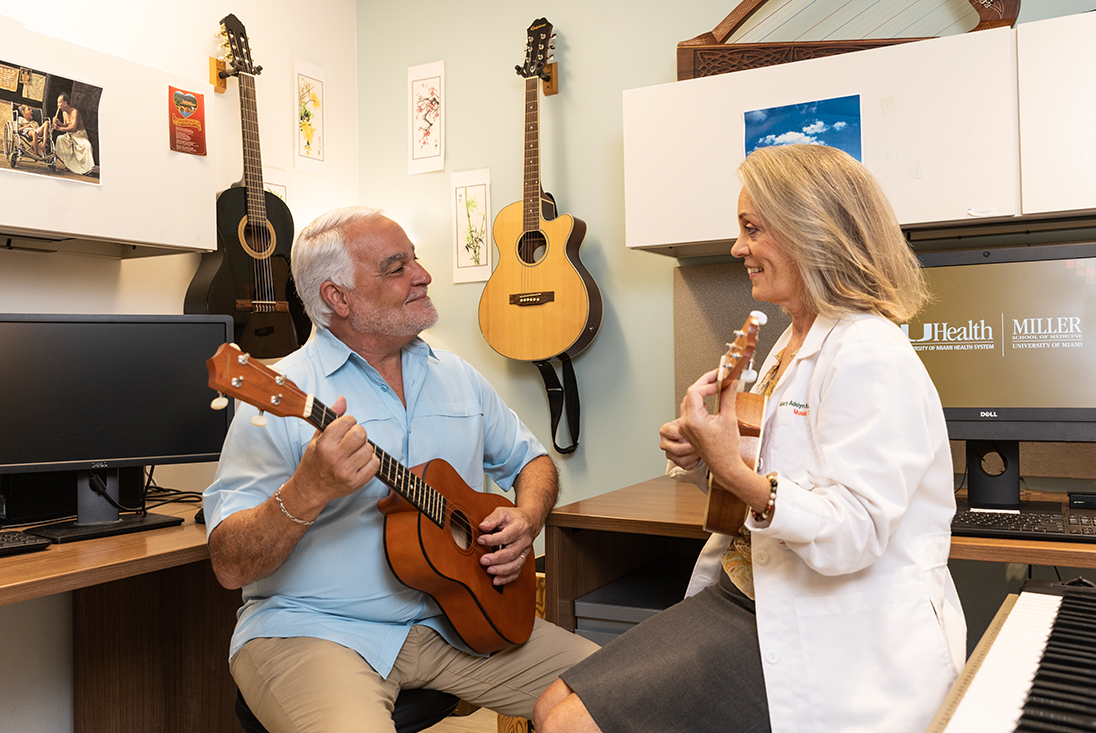
Mary Kauffman playing the guitar with a student

Music has many roles for us. It can be a source of inspiration, creativity, and connection, and it can also heal us.

Mary Adelyn Kauffman, DMA, MT-BC, NMT, is a music therapist at Sylvester Comprehensive Cancer Center and a musician-by-training. Her interest in music led her to Sylvester, and her personal experience as a cancer survivor made her more interested in learning how music therapy could help others.

“I always had a very large interest in the effect that music has on people,” Dr. Kauffman said. “My immediate background was in choral conducting, and I always noticed that people left the rehearsal in a far better mood than when they entered it. I was very interested in the science behind that.”

Music therapy uses individualized, clinical and research evidence-based music interventions in a therapeutic relationship aimed at addressing non-musical needs, concerns, and goals.

“Music therapy, like any type of psychosocial intervention, has got to be tailored to the individual,” Dr. Kauffman explained. “Every person’s brain is different, how they think, how they feel, how they emote, what experiences they've had. Just like an oncologist will tell you every single cancer is different.”

This personalization is established at an intake session with Dr. Kauffman, where she finds out what concerns and needs the patient may have, what that patient may know about music therapy and if they have any musical background. For example, do they like to sing? Were they in the school marching band growing up? Did they have musical lessons as a child and were they a positive or negative experience? Most importantly, Dr. Kauffman wants to find out how she can best help each patient.

“Most of the time, cancer survivors want help coping with psychosocial symptom distress, with anxiety, with adjustment, with mood, with getting used to the new normal, or trying to go back to the old normal,” she said. “I mean, I'm a cancer survivor. So, I know life as it was before is not going to be exactly the same.”

Through music therapy, survivors can address things like emotional processing and self-expression, movement, cognitive training, pain management, speech and communication, sleep improvement, and psychosocial symptom management, such as mood adjustment or anxiety reduction.

Once a cancer survivor’s needs are established, Dr. Kauffman can recommend a treatment plan, including group or individual sessions, that can be more goal-oriented or process-oriented.

An example of a goal-oriented group is the Sylvester Choir, which is offered at the Lennar Foundation Medical Center and Sylvester Plantation locations.

“We learn new songs to perform, so while it’s a learning experience of how to find your voice, how to breathe, how to express yourself, how to feel confident again, it’s in the framework of accomplishing a goal.”
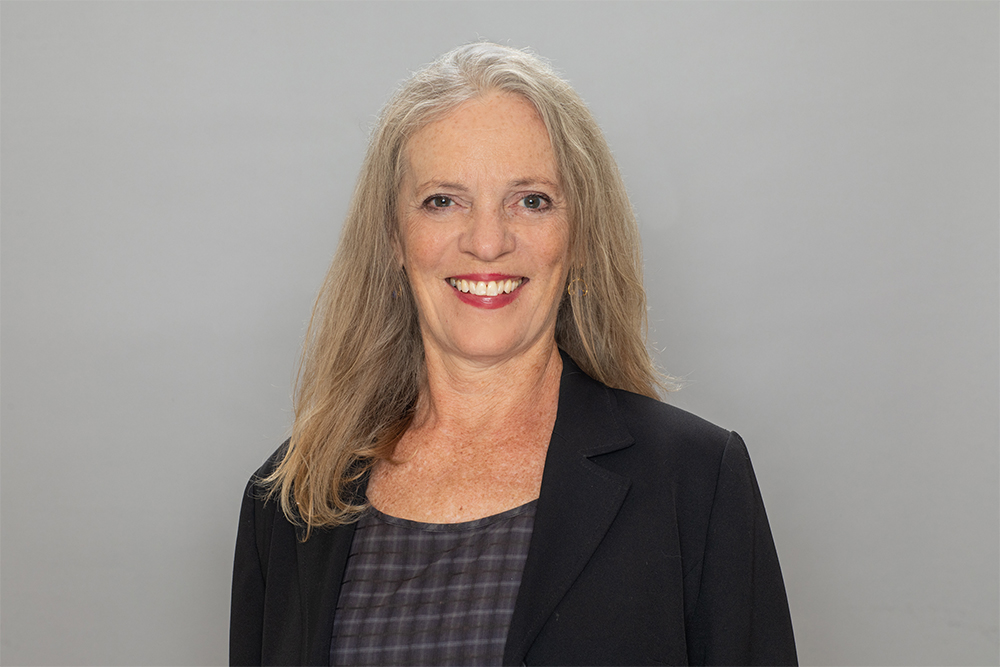
Mary Adelyn Kauffman, DMA, MT-BC, NMT

Process-oriented groups are about the experience and what you can learn about yourself during that experience. Whether it’s drumming, sound relaxation, music and movement, or music and yoga, “you're going to learn something about yourself while you are participating in the group and something about the other people in the group as well,” Dr. Kauffman said.

“Everybody should come and do group sessions as much as they can because it’s great making music,” Dr. Kauffman said. “It’s so much energy, and it's great for flexibility of mind. You don't know what's going to happen in a group. You have a framework, but even still, you're not sure what's going to happen. You have to be open, you have to listen, and you have to be flexible.”

Music can be a universal language, but each person’s experience with music therapy is unique.

“The amount of dopamine and serotonin that's released are greater in choral singing than it is in solo singing,” Dr. Kauffman said. “Also, there's the added oxytocin production that occurs with doing anything in a group, not just singing. It’s this feeling of bonding and that you’re not alone. You're all breathing together. There’s this synchrony that happens, and that's a really wonderful thing.”

Interestingly, a team of social neuroscientists from Bar-Ilan University and the University of Chicago introduced a model of the brain that sheds light on what happens in the brain when people make music together rather than when they listen to music individually. The researchers concluded that music can unite individuals, promote empathy and communication, and heal social divisions. So, music isn’t just for entertainment, but “instead is a core feature of human existence with important social implications.”

It’s also not uncommon for survivors to fall asleep during music therapy.

“Being a cancer survivor is hard work,” Dr. Kauffman said. “And if you are in your 30s 40s 50s, you have children, or you're running a business, or you're just trying to keep it all together, it's exhausting. So, if you do take that time for yourself, yeah, you fall asleep. Go ahead and take this time for yourself to just rest because being a survivor is exhausting.”

Some survivors have difficulty letting go in a group session, which requires a little vulnerability.

“I think they're a little bit afraid to let down their guard,” she said. “I’d notice a survivor may start to relax a little bit, and then they'll become alert again, like their mind is telling them, ‘I have to have to stay on my guard, something might happen.’”

Part of the music therapy experience is discovering something about yourself, whether you feel at peace, unable to let go, or something more nuanced and complicated. Whatever comes up for you, it’s something that you can explore further with a mental health counselor. Music therapy provides you with some tools to relieve and address symptoms that come with being a cancer survivor.

Group sessions aren’t for everyone, and that’s okay. In one-on-one sessions, survivors have the freedom to work on a specific, measurable need, like perhaps a survivor has had a benign brain tumor and is left with some motor deficits. Or maybe it’s a survivor who has memory deficits or chemo brain.
Mary Kauffman playing the guitar with a studentMary Adelyn Kauffman, DMA, MT-BC, NMT

According to Dr. Kauffman, playing an instrument is “a great way to train multiple areas of your brain. Playing an instrument can work on reestablishing synaptic contact across multiple brain areas, especially across the corpus callosum.”

Dr. Kauffman spoke about one patient whose cancer diagnosis exacerbated existing issues around self-esteem.

“This particular patient was experiencing feelings of worthlessness,” Dr. Kauffman said. “And I just thought: she needs a ukulele. The patient had no idea why she was being given a ukulele, and had never even played an instrument. She said to me, ‘I don't think I can't do this.’ And I asked her, ‘Would you like to be able to do it?’ And she said yes. And so, I gave it to her, and she actually learned to play. Afterward, she said, ‘I did something I didn't think I could do.’ And that's really significant.”

Individual sessions can also be an outlet for self-expression. In past sessions, Dr. Kauffman has helped her patients compose their own music, from the lyrics to the melodies. But by far, the most common intervention used in solo sessions is increasing attentional control via mindful listening.

“Attentional control is simply the ability to steer your mind,” she said. “One of the issues with anxiety and depression is that we have this attentional threat bias. We will see the bad thing and then we keep ruminating on the bad thing, and it's hard to pull ourselves out of it.”

Meditation can be a useful tool for working on this, but it can also be a challenge for those who do not have a meditation practice.

“First, they have to train their ability to get their mind off the threat.”

The technical aspects of mindful listening in a session are as follows: Dr. Kauffman will select a piece of music with a distinctive, repetitive sound so it’s easier to follow. She’ll ask the patient if they can hear a certain instrument. Once the patient has found a sound that they can hear, Dr. Kauffman asks them to follow the sound. If the patient’s mind wanders, she asks them to try to find their way back to the sound.

“That's the challenge, then it’s the training,” she said. “We know from the research that doing 12 minutes of meditation a day changes your brain and increases your ability to control your mind and improve focus.”

Music therapy may not be something that a cancer survivor thinks of immediately. Still, the barrier to entry is zero, making it an approachable intervention to deal with certain symptoms of cancer survivorship. Classes are free at Sylvester and offered in person and virtually.

For Dr. Kauffman, being a music therapist is about giving people a collective experience and instructing them how to use music mindfully with a minimum amount of effort and time out of their daily lives. If you decide to check out music therapy, her hope is that even if you only come once or twice, you will take what you learn and use it to improve your daily life.


logo--sylvester

NCI Designated

USNWR Cancer 2025-2026 Badge

Cancer Center of Excellence
Quick links
  • Appointments
  • Find a Doctor
  • Pay a Bill
  • Make a Gift
  • Insurance Plans Accepted
  • MyUHealthChart

Patient & Families
  • Cancer Treatments
  • Cancer Supportive Care
  • Your First Visit
  • Frequently Asked Questions
  • Nurse Navigators
  • Interpreter Services
  • Clinical Trials
  • International Patients
  • Medical Records
  • Price Transparency
  • Florida Health Finder
Research
  • Research at Sylvester
  • Research Programs
  • Research Labs & Faculty
  • Clinical Research Services
  • Shared Resources
  • Clinical Fellowship
  • Community Outreach Activity
About Sylvester
  • Why Choose Sylvester
  • NCI-Designated Cancer Center
  • Cancer Center of Excellence
  • Our History
  • Impact Reports
  • Mission, Vision & Values
  • Quality and Patient Safety
  • Leadership
  • Careers
  • Volunteers
  • For Media
  • Contact Us
  • Make a Gift

University of Miami Centennial Logo

Medical Disclaimer | Terms of Use | Privacy Statement | HIPAA Notice of Privacy Practices | For Employees
© 2025 University of Miami Health System. All rights reserved.